Sceye and Softbank Sceye And Softbank: Inside The Haps Japanese Partnership
1. This Partnership is More Than Connectivity
When two organisations from very different backgrounds that are based in New Mexico — a stratospheric aerospace firm and one of Japan’s biggest telecoms conglomerates – agree to develop a nation-wide network of high-altitude platforms, the story is bigger than broadband. The Sceye SoftBank partnership represents a legitimate bet on the stratospheric system to become a permanent, income-generating layer of national telecommunicationsIt is not a test project or a demonstration that works, it is rather the beginning of a full-scale commercial rollout with a defined timeline as well as a large-scale plan for the country.
2. SoftBank is a strategic investor to invest in Non-Terrestrial Networks
This interest of SoftBank’s in HAPS didn’t emerge from nowhere. The geography of Japan — thousands of islands, mountainous terrain and coastal areas regularly struck by earthquakes and typhoons This creates a constant coverage gaps that ground infrastructure alone won’t be able to fill. Satellite connectivity aids, but the cost and latency remain major the market for mass-market products. The stratospheric layer, which is located at 20 kilometres and occupying a position above specific regions while delivering high-speed broadband with low latency to ordinary devices, addresses a variety of these issues simultaneously. For SoftBank, investing in stratospheric platform is a natural extension of a strategy already in place for diversification beyond terrestrial network dependency.
3. Pre-Commercial Services to be Planned for Japan in 2026. Signal Real Momentum
The main point that distinguishes this agreement from previous HAPS announcements concerns the possibility of precommercial services to Japan starting in 2026. It’s more than a vague obligation, but rather a particular operational milestone, with infrastructure, regulatory, and commercial implications attached to it. When they reach precommercial status, the platforms need to be performing station keeping in a reliable manner, delivering usable signal quality, and interfacing with SoftBank’s existing network architecture. The time frame at which this date has been officially announced suggests that both parties have cleared enough technical and regulatory hurdles in order to view it as a real-world goal instead of aspirational marketing.
4. Sceye Offers a dependable platform and Payload Capacity Other Platforms Struggle to Match
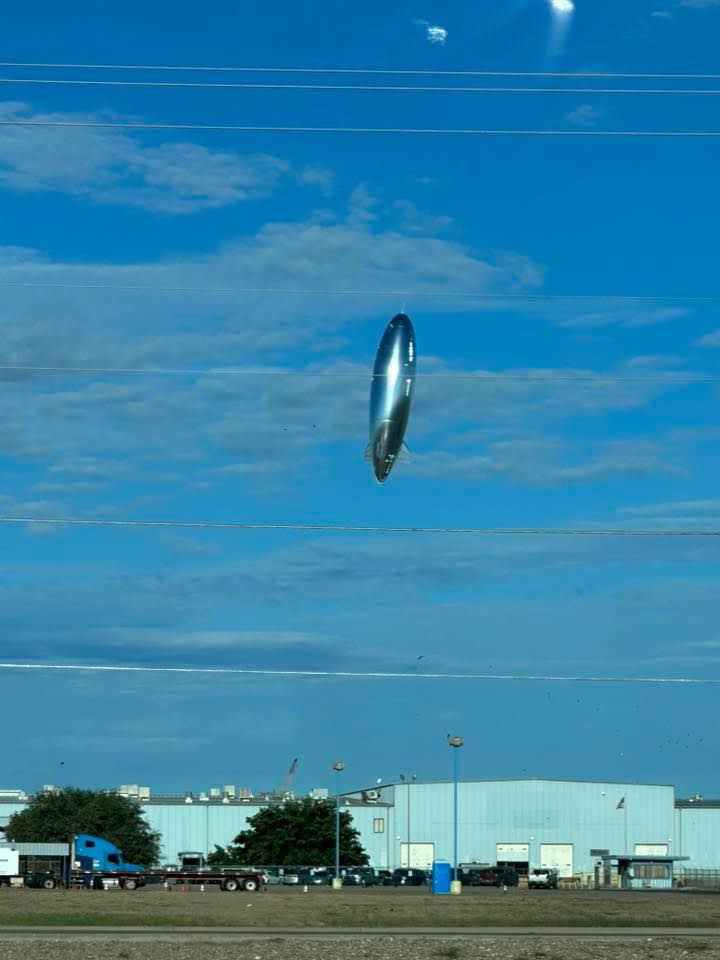
Not every HAPS vehicle is appropriate for a commercial network that spans the nation. Fixed-wing solar aircraft tend to swap payload capacity for an altitude-based performance, which limits how much telecommunications or observation equipment they can transport. Sceye’s lighter-than-air airship design takes the opposite approach, as buoyancy can carry the weight of a vehicle, which means that available solar energy goes toward propulsion stations, station keeping, and providing power to onboard systems, rather than simply keeping the aircraft in place. This decision in the design can lead to significant advantages in payload capacity and endurance of missions, both of which matter hugely when you’re trying keep a continuous supply of power over dense areas.
5. The Platform’s Multi Mission Capability makes the Economic Work
One of the unappreciated benefits of the Sceye method is that a single platform does not have to justify its operational costs solely through telecoms revenues. The same device that can provide stratospheric internet can also house sensors to monitor greenhouse gases as well as disaster detection as well as earth observations. For a country like Japan who is at a high risk for dangers from natural disasters and has national commitments in emissions monitoring, this multi-payload model will make the infrastructure much easier to justify at a federal and commercial level. The antenna for telecoms and the sensors for climate don’t competethey’re both sharing a platform and are already on the same platform.
6. beamforming as well as HIBS Technology Enhance the Signal Commercially Usable
The ability to provide broadband up to 20 km doesn’t simply mean pointing an antenna downward. The signal has to be directed, shaped, and managed dynamically to serve users effectively across a vast geographic area. Beamforming technology lets the stratospheric antenna to concentrate signal energy toward the most needed areas, instead of broadcasting uniformly and wasting energy over the empty open oceans or uninhabited terrain. This is combined with the HIBS (High-Altitude IMT Base Station) standards that make the platform compatible with the 4G and 5G devices in ecosystems, this means regular smartphones can be connected without the need for special equipment, a vital need for any mass-market installation.
7. The Japan’s Island Geography Is an Ideal Test Case for the World
If connectivity to the stratosphere is working with a high degree in Japan, the template becomes transferable to any other country that has similar coverage issues -which includes the majority nations around the world. Indonesia, the Philippines, Canada, Brazil and a host of other Pacific islands all have variations of the same problem as populations are spread across terrain that is in opposition to traditional infrastructure economics. Japan’s combination and capacity for regulation, along with real-world need provides it with the highest test ground for nationwide networks based on stratospheric platforms. How SoftBank and Sceye prove will guide deployments throughout the world for years.
8. This New Mexico Connection Matters More Than It appears
Sceye operating from New Mexico isn’t incidental. New Mexico has high-altitude testing conditions, a well-established Aerospace infrastructure as well as an airspace which is ideal for extended flight testing that vehicle development demands. Being one of the most serious aerospace companies in New Mexico, Sceye has developed its research and development programs in an environment that encourages true engineering iterations instead of press release cycles. The gap between the announcement of a HAPS platform and actually sustaining the same for weeks at times is huge, however, and Sceye’s New Mexico base reflects a company which has been putting in the not-so-glamorous job required to bridge that gap.
9. The Founder’s Vision Influenced the Partnership’s long-term goals
Mikkel Vestergaard’s work experience with a focus on applying technologies to help solve environmental and humanitarian issues — has clearly contributed to the vision Sceye hopes to create and why. The partnership with SoftBank isn’t only a business telecoms business. Sceye’s focus for disaster protection, monitoring in real-time, and connectivity for remote regions reflect a fundamental belief that infrastructure in the stratosphere must serve wide-ranging social needs alongside commercial ones. This approach has resulted in Sceye a more attractive partner for companies like SoftBank that operates in a strict regulatory and public space where corporate purpose carries real weight.
10. 2026 is the Year it will be the year that the Stratospheric Tier either Proves Itself or Resets Expectations
The HAPS sector has been promoting commercialization for longer than most people are likely to keep in mind. What makes these timelines Sceye and SoftBank timeline truly significant is that it connects a specific country, a specific operator, and also a certain service milestone to a certain year. If pre-commercial service offerings in Japan are launched on time and are able to perform as per specifications 2026 will mark how the world’s connectivity changed from promising technology to functioning infrastructure. If the infrastructure fails to function, the sector will be faced with more difficult questions regarding whether the engineering issues can be solved by recent announcements. It doesn’t matter, the collaboration has made a mark in the sky that’s worth keeping an eye on. Take a look at the top telecom antena for site advice including natural resource management, HIBS technology, what are high-altitude platform stations haps definition, stratospheric internet rollout begins offering coverage to remote regions, Wildfire detection technology, softbank haps pre-commercial services japan 2026, Stratospheric broadband, 5G backhaul solutions, space- high altitude balloon stratospheric balloon haps, Stratospheric earth observation and more.
How Stratospheric Platforms Are Changing Earth Observation
1. Earth Observation Has Always Been Constrained by the position of the observer
Every improvement in humanity’s capacity to track the surface of our planet has been based on finding more vantage points. Ground stations had local accuracy but no reach. Aircrafts increased range but consumed more fuel, and they required crews. Satellites offered global coverage, however, they also added distance which weighed Resolution and revisit frequency against scale. Each step upward in altitude resolved some issues while causing additional ones. The compromises involved in each one have changed our understanding about our planet. However, most important, what we cannot see clearly enough to make decisions about. Stratospheric platforms are avantage point that sits between satellites and aircraft and can help solve some of the most persistent trade-offs rather that simply shifting them.
2. Persistence is the ability to observe That Changes Everything
The most revolutionary thing that a stratospheric satellite platform can do for earth observation. The key to this is not precision, not size of coverage, nor sensor sophistication — it is persistence. The ability of watching the same spot over and over again, for a period of days or weeks at a time without gaps in the data record, makes a difference in the kinds of questions that earth observations can answer. Satellites address questions of state: what does this particular location look like at the moment? The stratospheric platform that is persistent answers questions regarding the process — how is this condition developing in the right direction, what is the rate affected by what triggers, and at what point is intervention required? For greenhouse gas monitoring, wildfire development, flood progression, and coastal pollution spread The questions about process are the ones that impact decision-making, and they require continuity that only the constant observation of the environment can provide.
3. It is believed that the Altitude Sweet Spot Produces Resolution that satellites cannot match at scale
Physics establishes the relationship between altitude, sensor aperture and resolution of the ground. A sensor operating at 20 kilometers could achieve ground resolutions that require a large aperture for replication from low Earth orbit. This means that a stratospheric observation platform is able to distinguish distinct infrastructure components like pipelines, storage tanks, maritime vessels, agricultural landthey appear as sub-pixel blur in satellite images at an equivalent cost. In cases such as monitoring the spread of pollution from an offshore facility in particular or identifying the precise site of methane leaks in the route of pipelines or tracking the leading edge of a wildfire over complicated terrain, this resolution advantage translates directly into the specificity of information available to people who manage the operation and.
4. Real-Time Methane Monitoring Became Operationally Useful from the Stratosphere
Methane monitoring on satellites have dramatically improved in recent years However, the mix of revisit frequency and resolution limitations means that satellite-based methane monitoring tends to find large, consistent emission sources, rather than intermittent releases from particular point sources. An stratospheric device that provides continuous monitoring of methane levels over an oil and gas producing zone, a large land area, or a waste management corridor can alter this dynamic. Continuous monitoring at a high resolution can pinpoint emission events as they occur, assign them to specific sources, with a precision that satellite measurements cannot provide, and create the kind of time-stamped sources-specific evidence that both regulatory enforcement and voluntary emissions reduction programmes and voluntary emissions reduction programmes both require in order to work effectively.
5. Sceye’s Approach Integrates Observation With the Broader Mission Architecture
What distinguishes Sceye’s approach to stratospheric observations of earth from thinking of it as a standalone installation of sensors is incorporation of the capability to observe within a broader multi-mission platform. The same car that has greenhouse gas sensors, also houses connectivity equipment for disaster detection systems and, possibly, other environmental monitoring payloads. This isn’t only a cost-sharing arrangement, it offers a coherent understanding of the data streams of different sensors can be more valuable in combination than in isolation. An connectivity system that observes is more valuable for operators. An observation platform that also can provide emergency communications is more important to government. Multi-mission technology increases the benefits of a single stratospheric deployment in ways that separate, single-purpose vehicles cannot replicate.
6. Oil Pollution Monitoring demonstrates the operational benefit of close Proximity
Inspecting for oil pollutants in coastal and offshore environments is an area where stratospheric observations offer advantages over both satellite and airborne approaches. Satellites can identify massive slicks, but struggle with the required resolution to spot expanding patterns, shoreline contact and the behavior of smaller releases prior to larger ones. Aircraft can provide the required resolution but cannot maintain continuous coverage of large areas at costly operational expense. The stratospheric platforms that are located above a coastal region can follow pollution events from initial discovery through spreading along the shoreline, to eventually dispersal — giving the continuous temporal and spatial information that emergency response and legal accountability require. The ability to track pollutant levels over an extended observation window with no gaps is virtually impossible from any other type of platform at a similar cost.
7. Wildfires Observation from the Stratosphere Captures What Ground Teams Aren’t able to See
The perspective that stratospheric high altitude provides in the presence of active wildfires is qualitatively different to that available from ground level or from aircrafts flying low. Fire behaviour in complex terrain (spotting ahead of the fire front, crown fire development, and the interactions between fire, changes in the wind patterns as well as fuel gradients of moisture — are evident in its complete spatial perspective only from an appropriate altitude. A stratospheric platform monitoring an active fire provides incident commanders with a real-time, large-area view of fire behavior that enables them to make their resource deployment decisions from what the burning fire is actually doing, not what the ground crews in certain places are experiencing. Being able to detect climate-related disasters in real time from this perspective does more than just enhance response- it changes the quality of command decisions throughout the duration of an event.
8. The Data Continuity Advantage Compounds Over Time
The individual events of observation are worth recording. Continuous observations have compounding value that grows exponentially with the length of time. A week of stratospheric Earth observation data for an agricultural area establishes the basis. A month’s worth of data reveals seasonal patterns. A single year records the whole year-long cycle of growth the use of water soil conditions, and yield fluctuations. Multiple year records form the basis for understanding how the region is changing with respect to climate variability and land management practices as well as trends in the availability of water. For natural resource management practices which include agriculture, forestry the water catchment system, coastal zone management — this accumulated observation record is often more valuable than any observation event on its own, regardless of the resolution or the speed at which it’s delivered.
9. The Technology that allows for long Observation Spacecraft is Growing Rapidly
Stratospheric geo-observation is limited by the platform’s capacity to stay in place long enough to yield useful data records. Energy systems control endurance — solar cell efficiency on stratospheric planes, lithium-sulfur battery density in the vicinity of 425 Wh/kg and the closed power loop that sustains all systems throughout the diurnal cycle have been improving at a speed that is starting to make multi-week and more than a month of stratospheric explorations operationally realistic instead of aspirationally scheduled. Sceye’s development work on New Mexico, focused on testing these energy systems in real operational conditions instead of calculations from labs, is an engineering advancement that will result in long-term observation missions and significant data records that are useful for the applications that depend on these systems.
10. Stratospheric Platforms are creating the New Environmental accountability
Perhaps the most enduring long-term result of mature stratospheric observation capabilities is what it can do to the information about environmental compliance and the stewardship of natural resources. When continuous, high-resolution, and persistent monitoring on emission sources, changes in land use as well as water extraction and pollutant events is available constantly rather than periodically, the responsibility landscape shifts. The agricultural sector, industrial operators, governments, and mining companies behave differently when they know what they’re doing is being observed continuously from above and with information which is accurate enough to satisfy the legal requirements and current enough to trigger the appropriate response to damage before it becomes irreversible. Sceye’s platform for stratospheric observations, as well as the general category of high altitude platform stations that have similar observation objectives, are helping to build the infrastructure to support a world where environmental accountability is rooted in continuous monitoring rather than regular self-reporting — a change that’s implications go far beyond the aerospace industry which has made it possible. See the top sceye haps project for site advice including HAPS technology leader, sceye haps project updates, sceye haps airship specifications payload endurance, softbank pre-commercial haps services japan 2026, sceye connectivity solutions, space- high altitude balloon stratospheric balloon haps, sceye haps status 2025, what are haps, sceye disaster detection, whats the haps and more.
